

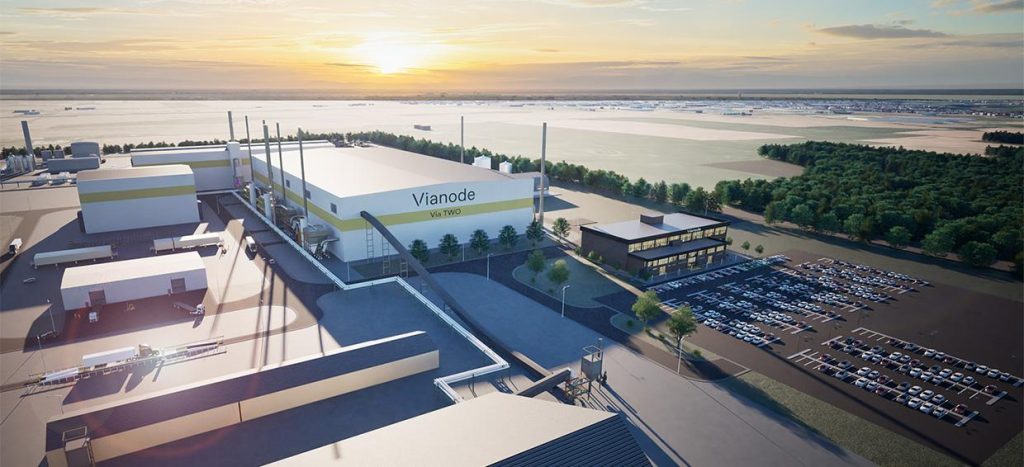
The electric vehicle (EV) landscape in Canada is evolving fast, and southwestern Ontario is quickly becoming a major hub for battery-related manufacturing. In a bold move, Norwegian company Vianode has confirmed a massive $3.2-billion investment to build a new synthetic graphite facility in St. Thomas, Ontario. This plant is expected to transform the region’s clean-tech economy by creating thousands of jobs and strengthening Canada’s position in the global EV supply chain.
Overview of Vianode’s $3.2B Investment
Vianode, a well-established Norwegian materials company, has announced plans to build a $3.2-billion synthetic graphite plant in St. Thomas. According to CEO Burkhard Straube, the new facility will begin by employing around 300 workers, eventually ramping up to 1,000 full-time jobs once full operations begin.
This strategic investment strengthens Canada’s rapidly developing EV battery ecosystem.
Why St. Thomas, Ontario Was Chosen
St. Thomas has quickly emerged as a major North American EV corridor. It is already home to PowerCo, Volkswagen’s new battery gigafactory, and offers:
- Strong transportation networks
- Proximity to automotive supply chains
- A skilled workforce
- Government incentives for green manufacturing
These factors make the region ideal for energy-materials production.
What Synthetic Graphite Is Used For
Synthetic graphite is a critical material used across several high-tech sectors. It plays an essential role in:
- Electric vehicle batteries (largest component by weight)
- Nuclear reactor systems
- Aerospace technology
- Advanced defence systems
Its stability, conductivity, and safety profile make it one of the most important engineered materials in modern clean-tech industries.
Connection to EV Battery Manufacturing
Although Vianode did not confirm any direct partnership with Volkswagen’s PowerCo gigafactory, the proximity of the two facilities suggests that future collaboration is possible.
Synthetic graphite is used in EV battery anodes, meaning supply and demand in the region will likely grow together.
Job Creation and Economic Impact
The new plant will generate major economic benefits:
| Phase | Jobs Created |
|---|---|
| Initial operation | 300 jobs |
| Full capacity | 1,000 jobs |
Beyond direct employment, thousands of indirect jobs may also emerge across:
- Transportation
- Mining
- Engineering
- Construction
- Local suppliers
This will provide long-term growth for businesses throughout southwestern Ontario.
Provincial Funding and Government Support
Ontario Premier Doug Ford confirmed that the province will support Vianode through a $670-million loan. This funding demonstrates Ontario’s commitment to expanding EV manufacturing and staying competitive with global clean-energy investments.
Ford emphasized that electric vehicles remain central to the province’s long-term economic plans.
Industry Slowdown and Market Context
Despite this major investment, the EV sector has recently faced market fluctuations. Several companies have slowed or paused their Canadian projects:
- Honda delayed its $15-billion battery plant in Alliston
- Umicore paused progress on its $2.7-billion battery materials facility in Kingston
Even with these slowdowns, Vianode’s project signals continued confidence in Canada’s long-term EV potential.
Future Outlook for Ontario’s EV Sector
The province’s EV ecosystem now includes:
- Battery gigafactories
- Materials processing plants
- Automotive innovation hubs
- Government research partnerships
Ontario is positioning itself as a global EV manufacturing destination, and Vianode’s new plant reinforces this momentum.
Benefits for Local Communities
Residents of St. Thomas and surrounding areas can expect:
- Stable long-term employment
- More training opportunities
- Increased infrastructure investment
- Stronger local businesses
- Growth in clean manufacturing industries
It’s a big win for the region, even if some parts of the EV market are moving a lil slower.
Final Thoughts
Vianode’s $3.2-billion graphite plant is a major step toward building a world-class EV supply chain in Ontario. Supported by significant government financing and located near the Volkswagen PowerCo factory, the project strengthens Canada’s global position in clean-energy innovation.