

ONTARIO — Red pine, long overlooked in the construction industry, is now being recognized as a cost-effective, sustainable option for building materials. Recent testing shows it can be engineered into cross-laminated timber (CLT) panels, opening new opportunities for housing and sustainable development.
For decades, red pine has been underutilized in construction. But new testing from the Mass Timber Institute (MTI), in collaboration with the Ontario Woodlot Association, Limerick Forest, and homebuilder CABN, demonstrates its potential as a strong and affordable alternative in CLT production.
2. Why Red Pine Was Overlooked
Traditionally, red pine has been used for hydro poles. Smaller, less desirable trees were often discarded or turned into compost. This left the species largely ignored by the housing sector.
3. The Role of the Mass Timber Institute
The MTI, based at the University of Toronto’s John H. Daniels Faculty of Architecture, has been researching ways to diversify mass timber inputs. Its findings show red pine can perform on par with more expensive species typically used in CLT.
4. CABN’s Prefabricated Housing Vision
CABN, founded by Jackson Wyatt, began four years ago as a builder of net-zero prefabricated homes. Today, its focus is on high-performance structural panels made with Canadian timber.
“When we can translate alternate species like red pine into mass timber, we can build all the homes Canada needs,” Wyatt explained.
5. Economic Opportunities for Ontario
Ontario is home to 280,000 hectares of red pine forests. Using this supply could bring new business to sawmills, municipalities, and crown forest operations. It also reduces waste from thinning smaller trees.
6. From Hydro Poles to Structural Panels
Red pine has long been harvested for its tall and straight timber. However, the CLT process allows the use of different grades and sizes, reducing costs while producing strong, durable building panels.
7. Prefabrication Advantages
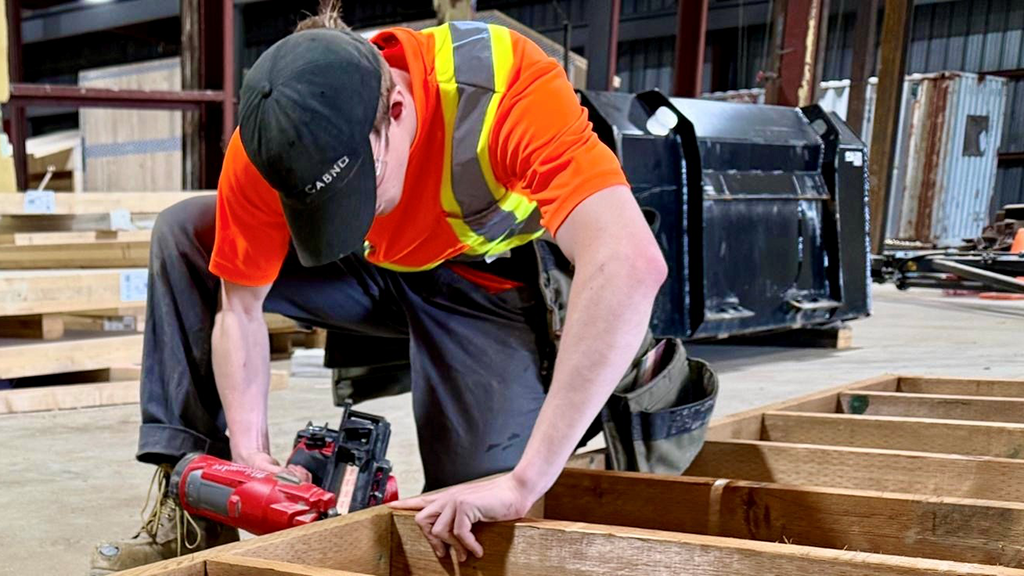
At CABN’s 93,000-square-foot factory in Brockville, CLT is converted into prefabricated shells complete with insulation, membranes, strapping, and sometimes windows. These panels can then be quickly assembled into homes.
8. Building Homes Faster and Cheaper
Wyatt says a 2,000-square-foot home can be erected in seven days and fully finished in about five weeks. This timeline is far shorter than conventional stick-frame construction, helping Canada tackle its housing affordability crisis.
9. Challenges Ahead for Red Pine CLT
Despite its promise, industry-wide adoption will take time. Certification, accountability, and quality assurance remain hurdles.
“One thing you can’t speed up is proper accountability,” Wyatt noted. “It always takes a little bit longer than you expect.”
10. Conclusion
Red pine’s shift from hydro poles to mass timber building panels could mark a turning point in Canada’s construction industry. With its abundance, affordability, and strength, it may soon play a leading role in sustainable housing solutions.