

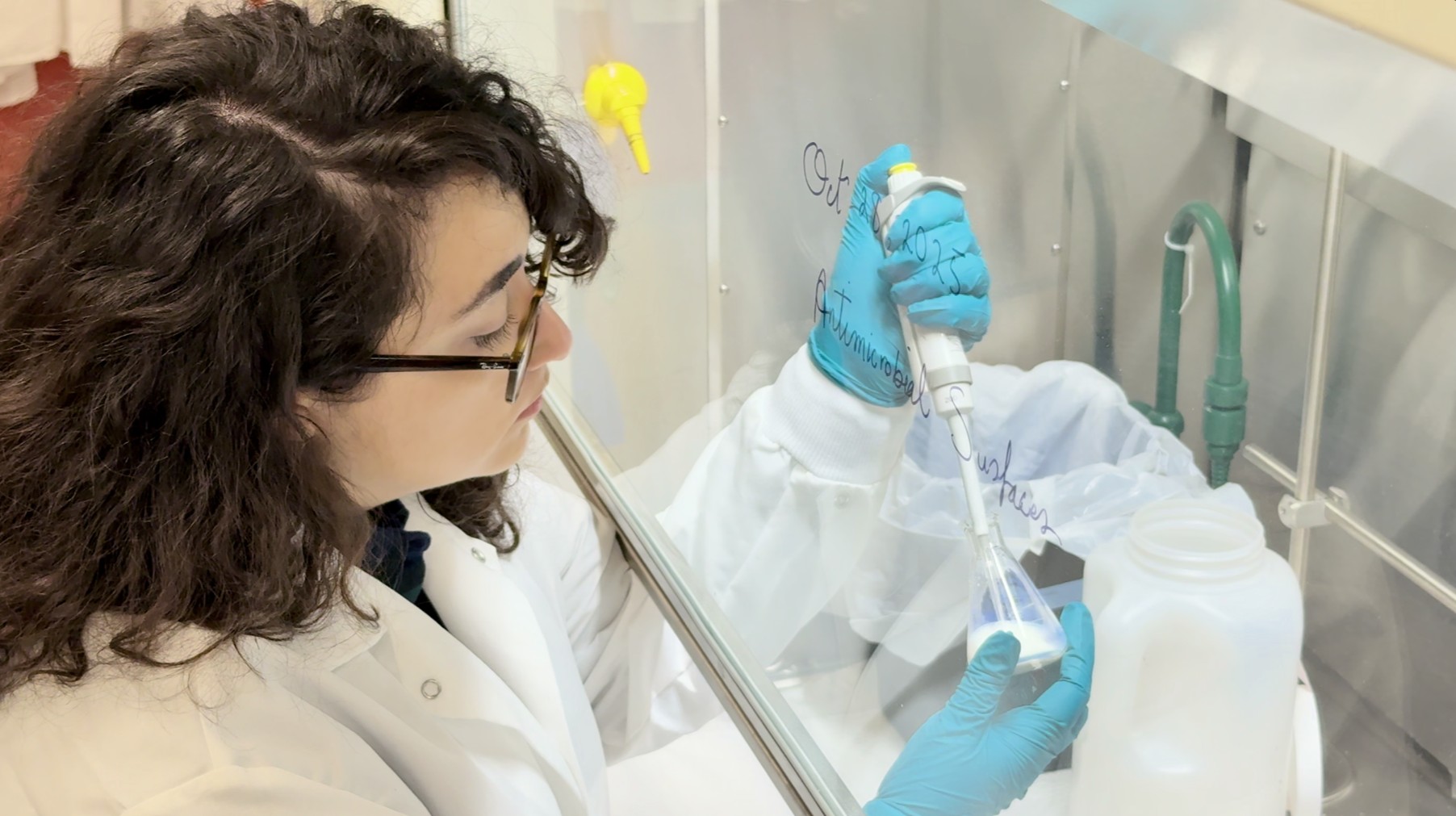
A Hamilton-based researcher is gaining national recognition for an innovative antimicrobial coating that could dramatically change how workplaces protect employees from drug-resistant bacteria. Dr. Sara Imani, a postdoctoral fellow at McMaster University’s Faculty of Engineering, has developed a long-lasting surface treatment designed to kill superbugs on contact — offering a potential new frontline defence against workplace-acquired infections.
1. The Innovation at a Glance
Dr. Sara Imani’s research focuses on creating a durable antimicrobial coating capable of neutralizing dangerous bacteria instantly. Unlike short-lived disinfectants, this coating maintains effectiveness over time, enabling workplaces to improve long-term hygiene without constant reapplication.
Learn more about workplace safety topics on our blog.
2. National Recognition Through Mitacs Award
Imani recently received the Mitacs Innovation Award — Outstanding Innovation, a prestigious national honor celebrating Canadian researchers with significant societal and economic impact. The award underscores the growing need for innovative solutions to healthcare-associated infections, particularly in high-touch and high-risk environments.
3. How the Antimicrobial Coating Works
The coating uses advanced nanotechnology and can be applied just as easily as regular paint. According to Imani, it forms a thin, nearly invisible protective film that continuously prevents pathogens from surviving on treated surfaces. It’s simple, scalable, and adaptable to different workplace settings.
This just makes surface cleaning much easier than traditonal disinfectants.
4. Laboratory Results Against Drug-Resistant Superbugs
Testing confirmed the coating kills some of the most stubborn and dangerous bacteria, including:
- MRSA (Methicillin-resistant Staphylococcus aureus)
- Pseudomonas aeruginosa
Both are notorious for causing persistent infections in hospitals, workplaces, and shared facilities. The coating was shown to eliminate these bacteria by more than 99%, demonstrating strong potential for real-world infection control.
5. Workplace Health and Safety Impacts
If commercialized, this innovation could become a game-changer for:
- Hospitals
- Offices
- Schools
- Transit systems
- Industrial workplaces
By preventing harmful pathogens from surviving on high-touch surfaces, organizations could significantly reduce workplace absenteeism, infection outbreaks, and related healthcare costs.
See how workplaces are adopting new safety solutions on our services page.
6. Collaboration With FendX Technologies
The project is advancing in partnership with FendX Technologies, an Oakville-based company preparing for pilot studies and regulatory approvals. FendX was formed through Imani’s earlier research at McMaster, demonstrating how academic innovation can translate into commercial impact.
7. Importance of Surface Hygiene Post-Pandemic
The COVID-19 pandemic changed how organizations think about hygiene. Imani notes that surface contamination plays a critical role in infection spread, making investment in new technologies essential for future readiness. Improved surface protection can directly influence infection suppression in workplaces and public spaces.
8. Durability and Real-World Applications
Durability tests show the coating remains effective even after:
- Abrasion
- Constant handling
- Exposure to ultraviolet light
This makes it ideal for high-traffic environments where surfaces are continually in use and cleaning cycles are frequent.
9. Commercialization Timeline
Though not yet available to the public, the goal is to bring the product to market within the next year. Imani says she hopes workplaces and consumers will soon benefit from the coating’s powerful antimicrobial properties.
10. External Resources
- Government of Canada – Antimicrobial Resistance Strategy: https://www.canada.ca/en/public-health/services/antimicrobial-resistance.html
- McMaster University – Engineering Research: https://www.mcmaster.ca
11. Conclusion
As antimicrobial resistance grows worldwide, innovations like Dr. Imani’s coating offer a promising tool in the fight against superbugs. With strong early results, durability, and commercial partnerships in place, this breakthrough could soon redefine workplace safety and modern hygiene standards.