

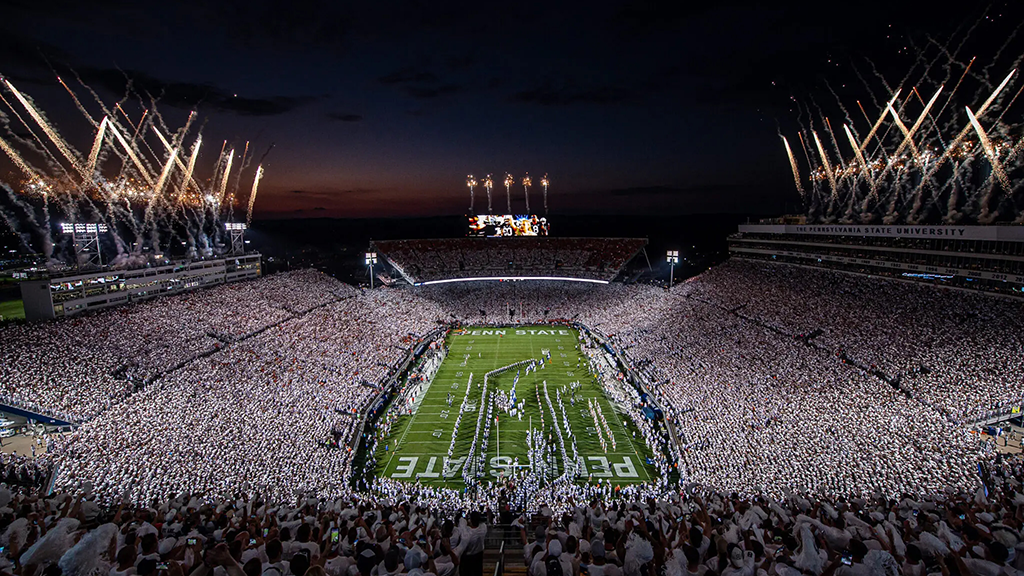
STATE COLLEGE, Pa. — At Penn State University, some of the most exciting plays aren’t being made on the gridiron. Instead, they’re being rolled out off the field by hardworking construction crews leading the way on a $700 million renovation of Beaver Stadium, one of college football’s most iconic venues.
Beaver Stadium, home to more than 100,000 Penn State football fans, is undergoing the most ambitious renovation in its history. This three-year, $700 million project aims to modernize the fan experience while preserving the venue’s legendary reputation as one of the toughest places to play college football.
2. Background of Beaver Stadium
- Opened: 1960
- Current Capacity: Over 100,000
- Known as: One of the largest stadiums in North America
For decades, Beaver Stadium has been a fortress for Penn State, but aging infrastructure and changing fan expectations made modernization necessary.
3. Why the Renovation Was Needed
The university identified several challenges:
- Outdated press boxes and suites
- Narrow concourses causing congestion
- Limited accessibility for fans
- Lack of premium seating options
The goal is to bring Beaver Stadium into a new era, while keeping its iconic feel intact.
4. Phase One: Major Demolition Work
The first phase, completed after the 2024 season, included:
- Demolition of the four-floor press box and west-side suites
- Removal of the upper bowl and ground-level structures
- Installation of 9,000 temporary bleacher seats
The demolition was dramatic, with charges set off in sequence, toppling decades of stadium history to make room for the future.
5. Temporary Seating and Fan Arrangements
To ensure fans didn’t miss out on the action, Penn State installed:
- 9,000 temporary bleachers
- Secure barriers to protect visitors from active construction zones
- Adjusted game-day parking during the season
This flexible approach is keeping attendance above 100,000 during renovations.
6. The New West-Side Tower and Premium Clubs
A major highlight of the project is the new west-side tower, which will feature two exclusive clubs:
| Club Name | Features | Entry Price |
|---|---|---|
| Schuyler Family Club | 2,250 luxury seats, private lounge | $4,500+ |
| Marzano Club | 2,250 premium seats, 35,000 sq. ft lounge | $4,500+ |
Fans will also need to contribute a $10,000 gift to reserve club seating, making this one of the most premium experiences in college football.
7. Challenges of Renovating an Active Stadium
Unlike most stadiums, Beaver Stadium must remain fully operational:
- Construction expands in the offseason
- Work zones shrink during football season
- Strict barriers keep fans away from restricted areas
This balancing act ensures football traditions remain uninterrupted.
8. Phase Two: Plans for the Lower Bowl
In 2026, after the football season:
- The lower bowl (superstructure) will be demolished
- New club levels will be completed
- Work will begin to rebuild the entire lower seating area
The stadium will continue to operate at full capacity throughout this process.
9. Stadium Enhancements and Fan Amenities
The upgrades include:
- Double-width concourses for easier movement
- New escalators, elevators, and ramps
- Upgraded stadium lighting
- New north videoboard and west-side ribbon boards
These improvements will transform game-day flow and enhance the overall fan experience.
10. Commitment to Sustainability (LEED Certification)
Penn State has pledged to make Beaver Stadium its first LEED-certified athletic facility. Efforts include:
- Use of sustainable construction materials
- Energy-efficient lighting systems
- Waste reduction and recycling during construction
11. Community and Economic Impact
The stadium renovation is not just about football. It is expected to:
- Employ 800–1,000 tradespeople each summer
- Keep 450 workers onsite daily at peak
- Generate $15 million in local economic impact
- Source 75% of materials and labor from Pennsylvania
This ensures that local communities benefit directly.
12. The Construction & Design Team Behind the Project
The renovation is being led by a tri-venture construction team:
- Barton Malow
- AECOM Hunt
- Alexander Construction
With consulting from Nations Group and architecture by Populous, a firm known globally for designing iconic sports venues.
13. Voices from Penn State Athletics
Pat Kraft, Vice President of Intercollegiate Athletics, explained:
“This renovation is not just for football, but for all 31 sports at Penn State. It will modernize Beaver Stadium while keeping its historic roots alive.”
14. What the Future Holds for Beaver Stadium
By the time the project is completed in 2027, Beaver Stadium will feature:
- Modernized west and lower bowls
- Expanded concourses and vertical circulation
- Premium clubs and new videoboards
- A sustainable, LEED-certified design
Penn State aims to maintain its status as one of the largest and most intimidating stadiums in the country.
15. Conclusion
The $700 million Beaver Stadium renovation is more than a construction project—it’s a transformation of one of the most historic venues in college football. By blending tradition with innovation, Penn State is ensuring that Beaver Stadium remains a place where history is made, both on and off the field.