

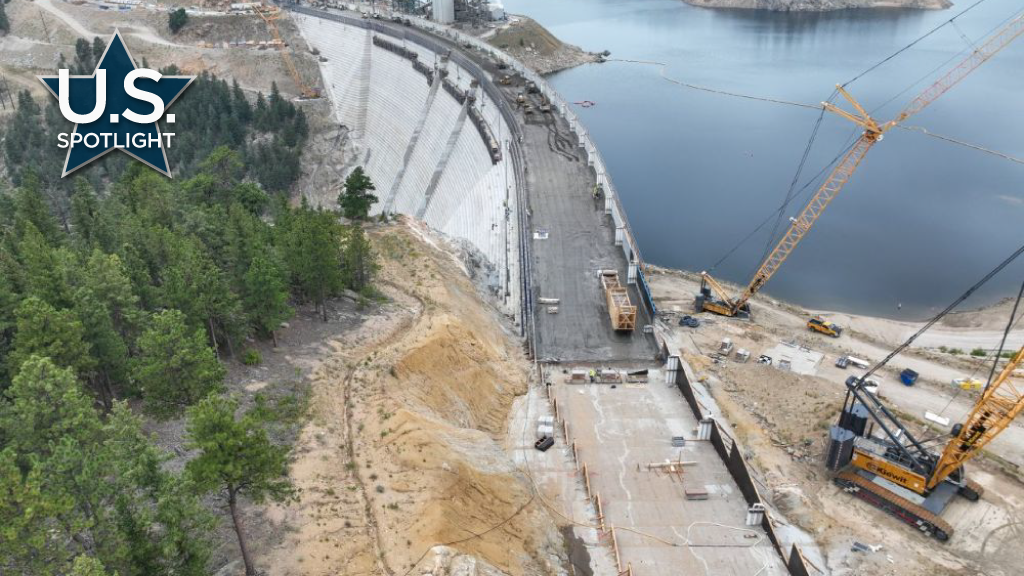
Colorado’s iconic Gross Dam is undergoing one of the largest dam-raising projects in U.S. history, transforming the structure into a towering new landmark. With a $565 million expansion underway, crews are working day and night to elevate the dam, increase water capacity, and secure a stronger water future for Denver communities. This detailed look explores how the project is unfolding and what makes it such a remarkable engineering effort.
1. Project Overview
The Gross Dam expansion in Boulder County, northwest of Denver, is a major construction effort aimed at increasing reservoir capacity and improving long-term water reliability for the region.
2. How Much the Dam Is Being Raised
Crews are elevating the structure by 131 feet, bringing its final height to 471 feet and expanding its width to roughly 2,000 feet. Once finished, it will be the tallest dam in Colorado and the largest dam-raise project ever completed in the United States.
3. Why the Expansion Is Needed
The increased height will allow Denver Water to store an additional 77,000 acre-feet of water, primarily sourced from the Fraser and Williams Fork Rivers. This boost strengthens supply for the rapidly growing Front Range population.
4. Construction Techniques in Use
A batch plant located hundreds of feet below the crest produces concrete that travels through a specialized conveyor system. At the top, trucks redistribute the material for step-by-step placement. Workers are using Roller Compacted Concrete, a method that involves:
- Delivering concrete with mini dump trucks
- Spreading with small bulldozers
- Compacting it into place with heavy rollers
5. Unique Step-by-Step Design
The new dam is being built with 118 concrete steps, each roughly four feet tall and offset by two feet from the step below. This creates a steep, stair-like design that supports both weight distribution and long-term stability.
| Step Feature | Measurement |
|---|---|
| Number of steps | 118 |
| Step height | 4 ft |
| Step setback | 2 ft |
| Final dam thickness (base) | 300 ft |
| Final dam thickness (top) | 25 ft |
6. Engineering Challenges on Site
As the dam rises, the structure narrows—making the workspace tighter for crews and equipment. “Our workspace gets smaller and smaller as we get taller,” said deputy program manager Casey Dick. This creates complex logistical challenges and demands precise coordination.
7. Contractors Leading the Project
The build is being delivered by a joint venture between Kiewit Corp. and Barnard Construction Co. One of the most critical tasks has been forming the step-based structure so concrete remains in place until fully cured.
8. Timeline and Key Milestones
Major progress milestones include:
- Construction start: April 1, 2022
- Step construction reaching original crest: Summer 2024
- Steps expected to finish: End of 2025
- Final structural components (control building, railing, bridge): 2026
- Filling of the reservoir & project completion: 2027
9. Environmental & Legal Hurdles
Work was temporarily halted in 2023 due to lawsuits claiming the U.S. Army Corps of Engineers didn’t fully assess climate impacts. A federal judge later allowed construction to resume, though restrictions remain on filling the reservoir and removing over 200,000 trees. Denver Water is actively appealing these conditions.
10. Costs and Budget Evolution
Originally approved at $531 million, the project budget has risen to $565 million after adjustments in 2023. Inflation, material costs, and extended construction timelines contributed to the increase.
11. Benefits for Colorado Residents
The expansion provides long-term water security for the Denver metro region. Beyond water supply, the project delivers economic benefits by supporting jobs in construction, engineering, transportation, and local services. It helps improve community resilience, even though some folks may find the construction noise a bit annoying.
12. Final Thoughts
The Gross Dam expansion represents a massive investment in Colorado’s water future and infrastructure stability. Despite environmental debates and cost fluctuations, the project is moving steadily toward completion, setting a new benchmark for modern dam engineering.