

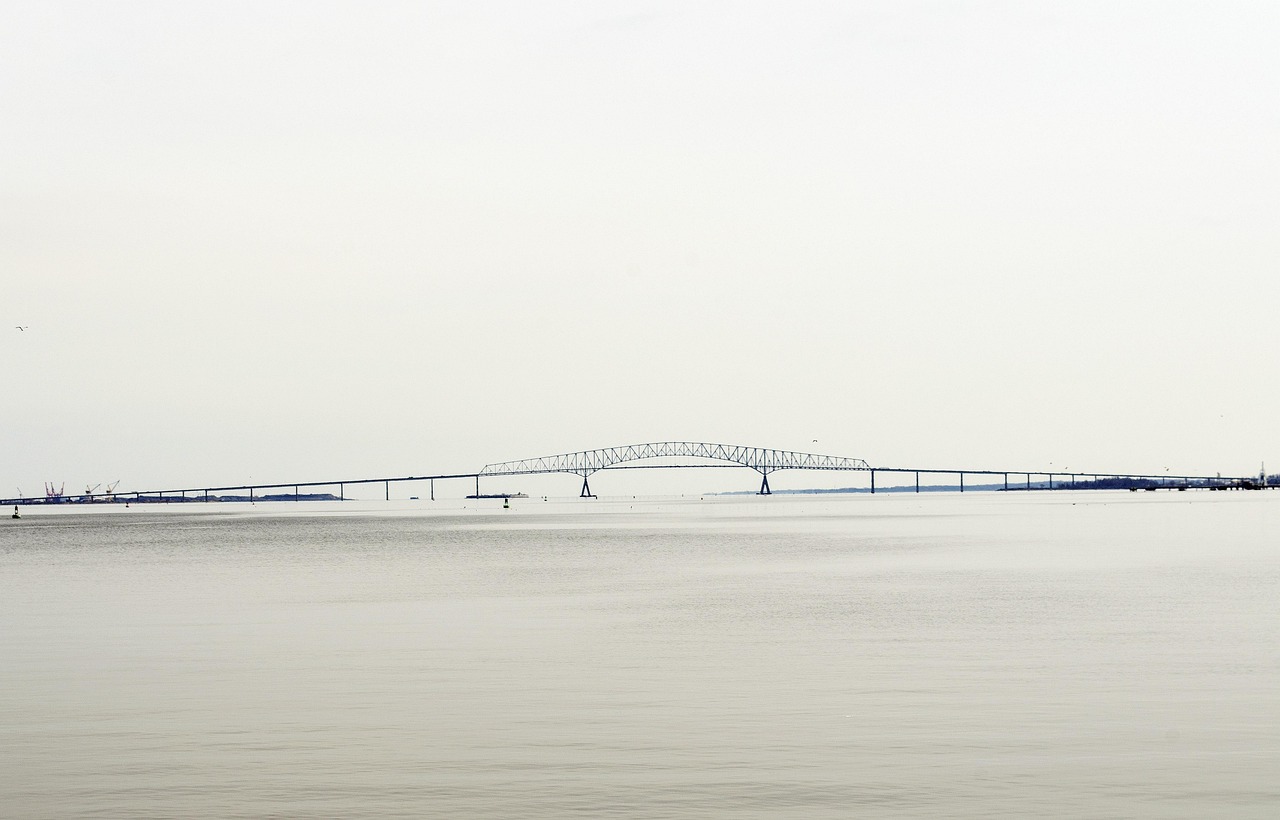
The Maryland Transportation Authority (MDTA) has unveiled detailed renderings and progress updates for the reconstruction of the Francis Scott Key Bridge, marking a major milestone in Baltimore’s infrastructure recovery. The new design blends cutting-edge safety, modern engineering, and environmental stewardship, symbolizing renewal after the tragic March 2024 bridge collapse that claimed six lives.
1. Overview of the Replacement Project
The replacement Francis Scott Key Bridge will span two miles across the Patapsco River, connecting vital transportation arteries in Maryland and the U.S. East Coast.
Designed to modern safety standards, the bridge will include:
- Two 12-foot lanes in each direction
- 10-foot-wide outside shoulders and four-foot inside shoulders
- A clearance of 230 feet above the federal shipping channel for large vessel navigation
These specifications reflect lessons learned from the collapse and emphasize both durability and transportation resilience.
2. Bridge Design and Safety Features
The upcoming structure will be a cable-stayed bridge supported by twin towers exceeding 600 feet in height, designed to last over 100 years.
The new design integrates:
- Advanced collision-resistant foundations
- Smart sensors for structural health monitoring
- Seismic and wind-resistant systems to withstand extreme weather events
According to MDTA officials, the design aims to “set a new benchmark for transportation infrastructure safety.”
3. Demolition Progress and Environmental Controls
Demolition of the damaged bridge, which began in July 2025, is progressing steadily and expected to conclude within nine months.
Key updates include:
- Removal of 20,000 tons of concrete decking
- Dismantling and recycling of 50,000-pound steel girders
- Deployment of noise and vibration monitors to protect nearby communities
The MDTA emphasizes environmental compliance, ensuring work proceeds with minimal impact on the surrounding ecosystem.
4. Foundation Testing and Structural Integrity
A critical milestone in the rebuild is the Test Pile Program, launched in October 2025.
This phase involves driving 12 massive steel test piles — each 8 feet in diameter and over 220 feet long — into the riverbed to confirm the foundation’s engineering design.
To mitigate ecological impact, crews are using an air bubble curtain system, which significantly reduces underwater noise during pile driving and safeguards aquatic life in the Patapsco River.
5. Key Engineering Innovations
The new Key Bridge incorporates several state-of-the-art engineering and safety innovations, including:
- Smart monitoring technologies for real-time data on load, stress, and vibration
- Corrosion-resistant materials for extended service life
- Modular construction methods to accelerate assembly and minimize disruptions
Such advancements reflect the U.S. commitment to sustainable, resilient infrastructure following one of the most significant bridge collapses in modern history.
6. Project Timeline and Budget
- Project Cost: Approximately $2 billion
- Contractor: Kiewit Infrastructure Co. (awarded August 2024)
- Construction Start: Early 2025
- Estimated Completion: Fall 2028
The MDTA states the new bridge will serve as a critical transportation corridor supporting Baltimore’s port economy and regional growth for decades to come.
7. Remembering the 2024 Tragedy
The original Francis Scott Key Bridge collapsed in March 2024 after being struck by a cargo ship, killing six construction workers and halting one of the East Coast’s busiest shipping routes.
The rebuild not only restores a vital link but also stands as a tribute to the workers who lost their lives and a testament to the region’s resilience and unity.
8. The Future of Baltimore’s Infrastructure
Once completed, the new Key Bridge will symbolize renewal, innovation, and safety in U.S. infrastructure. It will reconnect communities, strengthen supply chains, and redefine the Baltimore skyline with its sleek twin-tower design.