

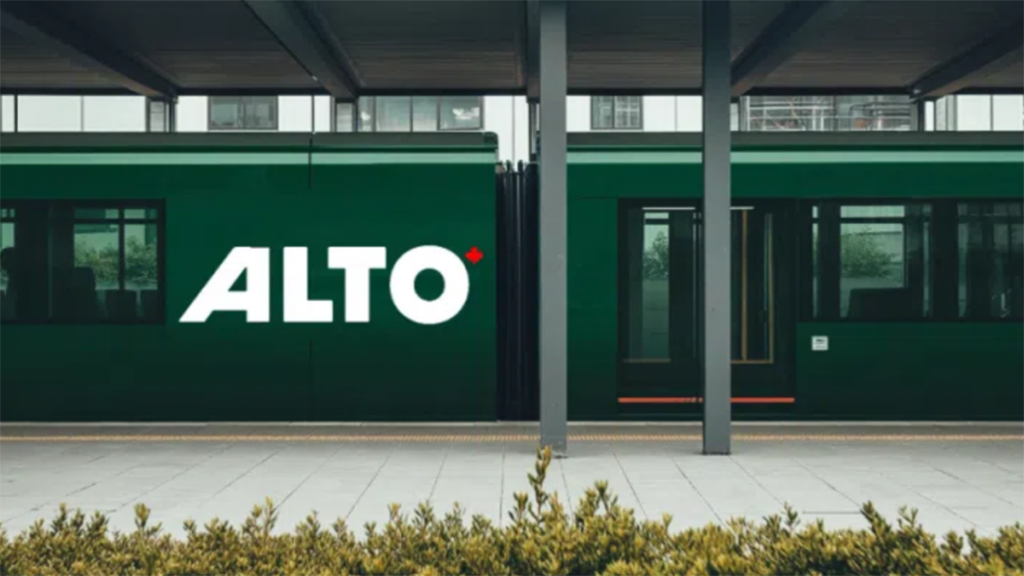
Imagine the biggest infrastructure push in Canada in over 50 years — but this time, there’s an unprecedented call to use Canadian steel at scale. That’s the vision Alto, the Crown corporation behind Canada’s first high-speed rail (HSR) network, is pushing together with its private partner, Cadence. They’re now asking the steel industry: Are you ready for this opportunity? Their outreach could reshape not just infrastructure, but Canada’s entire industrial ecosystem.
1. Why Alto and Cadence Are Reaching Out to Steelmakers
Alto and Cadence are launching consultations with Canada’s steel industry to evaluate its capacity and readiness to supply critical materials for their 1,000 km high-speed rail line. According to their announcement, they want to understand production scale, modernization potential, and how to source locally wherever possible. Newswire+2constructconnect.com+2
This outreach isn’t just symbolic — it’s a signal that Alto intends to build domestic supply chains, boost Canadian manufacturing, and channel the economic value of this mega-project back into local businesses and communities. Newswire
2. What Does the High-Speed Rail Project Entail?
- The Alto high-speed rail network will link Toronto and Québec City, spanning roughly 1,000 km. tc.canada.ca+2To Do Canada+2
- Trains are expected to reach speeds of up to 300 km/h, dramatically cutting travel times and connecting major Canadian urban centers. constructconnect.com+2Prime Minister Canada+2
- The Cadence consortium (which includes CDPQ Infra, AtkinsRéalis, SYSTRA Canada, Keolis Canada, SNCF Voyageurs, and Air Canada) has been selected to co-develop the project. cadence.info+1
- A contract for the design and development phase has already been signed. masstransitmag.com
3. The Scale of Steel Needed: Rails, Beams & More
The project’s sheer magnitude means a massive demand for steel:
- Over 4,000 km of steel rails will be required. constructconnect.com+1
- In addition, structural steel for supports, beams, catenary systems (for electrified rail), and other core infrastructure components will be needed. Newswire
- This is not a small or niche infrastructure project — it’s a nation-building procurement opportunity for the Canadian steel sector. link2build.ca
4. Economic & Industrial Opportunity for Canadian Steel
Alto describes this as a “rare opportunity” for the Canadian steel and manufacturing sectors to expand capacity, modernize, and invest in innovation. Newswire
By sourcing domestically:
- Steel companies can scale up production.
- Investments in technology and manufacturing processes could accelerate.
- The economic ripple effects could benefit regions far beyond the rail corridor — not just during construction, but long after.
5. Procurement Strategy & “Buy Canadian” Focus
- Alto’s outreach is explicitly aligned with the federal government’s Buy Canadian policy. Newswire
- The plan is to build procurement processes that prioritize Canadian suppliers wherever possible. Newswire
- This means long-term contracts and real incentives for domestic steel producers to gear up.
6. Timeline: From Pre-Procurement to Construction
- Pre-procurement work for many of the major project components is expected to begin in 2026. Newswire
- Alto aims to start construction within four years, with major design and development work already underway. Newswire
- The early steel-industry engagement is strategic: it gives producers time to scale, modernize, and respond to future requests for proposals.
7. Job Creation & Long-Term Economic Impact
- The build is projected to create over 50,000 jobs during construction. Newswire
- Beyond construction, stronger domestic supply chains can help sustain jobs in manufacturing, logistics, and related sectors.
- According to Alto, the rail project could generate tens of billions of dollars in productivity gains annually as travel becomes faster and more efficient. Newswire
8. Risks & Challenges for the Steel Sector
While the opportunity is huge, so are the challenges:
- Canadian steel producers must ramp up production significantly.
- Modernization (new mills, new processes) costs capital — not all firms may be ready.
- Price pressures and global competition may complicate local sourcing.
- Supply chain resilience: meeting scale and quality for high-speed rail components is demanding.
9. Why This Matters for Canada’s Future
- A high-speed rail network of this magnitude could transform how Canadians travel and work, connecting economic hubs in hours instead of days. Prime Minister Canada
- Sourcing domestically means money stays in Canada, boosting regional economies and industrial capability.
- It’s a nation-building project that aligns with climate goals, job creation, and long-term economic competitiveness.
10. How Steel Producers Can Engage
If you’re part of Canada’s steel industry and want to be part of Alto’s supply chain:
- Reach out: Alto and Cadence are contacting industry leaders — make sure your firm is part of the conversation.
- Assess capacity: Be ready to show what you can produce now and what you could scale up.
- Explore modernization: Think about how you can invest in new technologies to meet the demand.
- Prepare for RFPs: Once procurement begins, supplier proposals will be critical — plan early.
11. Final Thoughts
Alto’s outreach to the Canadian steel industry is more than a procurement exercise — it’s a clarion call for industrial renewal. The high-speed rail project isn’t just about fast trains; it’s about reviving domestic manufacturing, creating jobs, and laying the foundation for a more resilient and connected Canadian economy.