

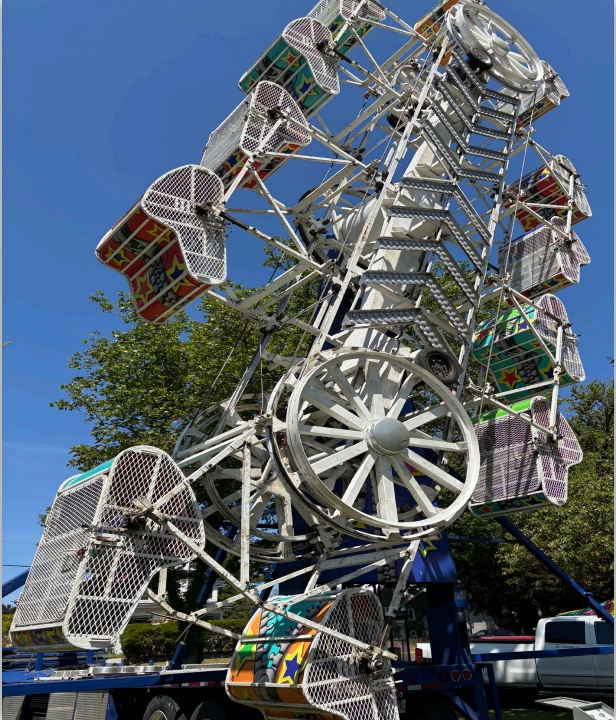
A disturbing new report from Technical Safety BC has revealed that a nine-year-old child was helping operate a travelling amusement ride when a patron fell several feet and suffered serious injuries. The incident, which took place during a Port Hardy carnival in May 2025, exposes deep operational gaps, weak oversight, and outdated safety systems that continue to plague travelling amusement operations across Canada.
1. What Happened at the Port Hardy Carnival
On May 31, 2025, an intoxicated rider fell nearly eight feet from a compartment on the Zipper ride during unloading. The accident resulted in multiple broken bones and triggered a detailed investigation by Technical Safety BC.
2. How a 9-Year-Old Became Involved in Ride Operations
Shockingly, the report confirmed that a nine-year-old child — the ride foreman’s son — was responsible for opening the compartment door during unloading.
Workers referred to this task as “cracking buckets,” something the child had done informally at previous fairs. However, investigators noted the child lacked the experience and confidence needed to handle abnormal or risky situations.
3. Sequence of Events Leading to the Fall
According to the investigation:
- The foreman stepped away from the ride area
- His child began helping with unloading
- An adult operator accidentally activated the ride
- The door of the compartment was open
- The intoxicated passenger was unrestrained
- The passenger fell approximately 6–8 feet to the ground
The entire activation lasted “two to three seconds,” but it was enough to cause a serious injury.
4. Condition of the Rider and Injuries
The intoxicated rider suffered broken bones and required urgent medical treatment. The fall height was consistent with the platform level shown in the Technical Safety BC imagery.
5. Safety Issues Identified on the Zipper Ride
Technical Safety BC identified multiple safety gaps:
| Safety Issue | Description |
|---|---|
| No Interlock System | Ride could move while doors were open |
| Outdated Single-Button Control | No secondary confirmation or redundancy |
| Lack of Door Restraints | Common feature missing in older rides |
| No Alarm System | No warning before motion |
The Zipper model was built in 1973, long before modern ride safety standards were established.
6. History of Incidents Involving Shooting Star Amusements
This was not the only concerning event. Less than three months later, on August 26, 2025, a worker with the same company was struck and killed by the Zipper ride in Prince Rupert.
Two serious incidents involving the same ride model and the same operator point to systemic safety and training issues.
7. Communication & Supervision Failures
Investigators found no formal communication protocols between ride attendants and operators. Workers relied on informal signals, assumptions, and routine habits — a system that breaks down quickly when something unexpected occurs.
8. The Role of Intoxication in the Incident
One attendant reported that “both the injured party and the person riding were hammered.”
Despite clear signage banning intoxicated riders, staff admitted that enforcement was rare because denying drunk patrons often led to confrontations. A bottle of alcohol was discovered in the compartment after the fall, confirming the rider’s impaired condition.
9. Outdated Ride Design and Missing Safeguards
The Zipper is operated using a single activation button, meaning:
- One accidental press can move the ride
- There is no confirmation step
- There is no sensor system to prevent movement with open doors
Modern rides include such interlocks as standard safety features. This older design significantly increases operational risk.
10. Key Findings From Technical Safety BC
Technical Safety BC concluded the incident was “preventable” and identified several contributing factors:
- Untrained or undertrained seasonal workers
- No effective supervision
- Allowing a minor to assist with ride tasks
- Outdated equipment lacking critical safeties
- Weak enforcement of safety rules for guests
- No standard communication protocols
11. What This Means for Public Safety
Travelling amusement rides attract families, children, and large crowds — yet many operate with temporary staff, older equipment, and minimal oversight. This incident shows the urgent need for consistent safety standards, updated ride technology, and proper training.
12. How Amusement Operators Can Prevent Future Tragedies
To reduce risk, operators should:
- Implement formal training programs
- Establish clear communication procedures
- Enforce sobriety rules for riders
- Replace or upgrade outdated ride systems
- Ensure minors are never allowed to perform ride tasks
- Improve supervision of seasonal workers
- Introduce pre-operation checklists
Even small changes can drastically reduce the chances of an accident.
13. Further Resources and Safety Reading
- Technical Safety BC – Amusement Device Safety
- Government of Canada – Occupational Health & Safety
- Canadian Centre for Occupational Health and Safety
You can also read more workplace safety insights on:
- /blog
- /news
- /home
14. Conclusion
The Port Hardy incident serves as a clear warning about the risks of informal staffing, outdated rides, and weak supervision. With stronger controls and proper training, preventable tragedies like this should not continue to occur, but sadly they still do sometimes.