

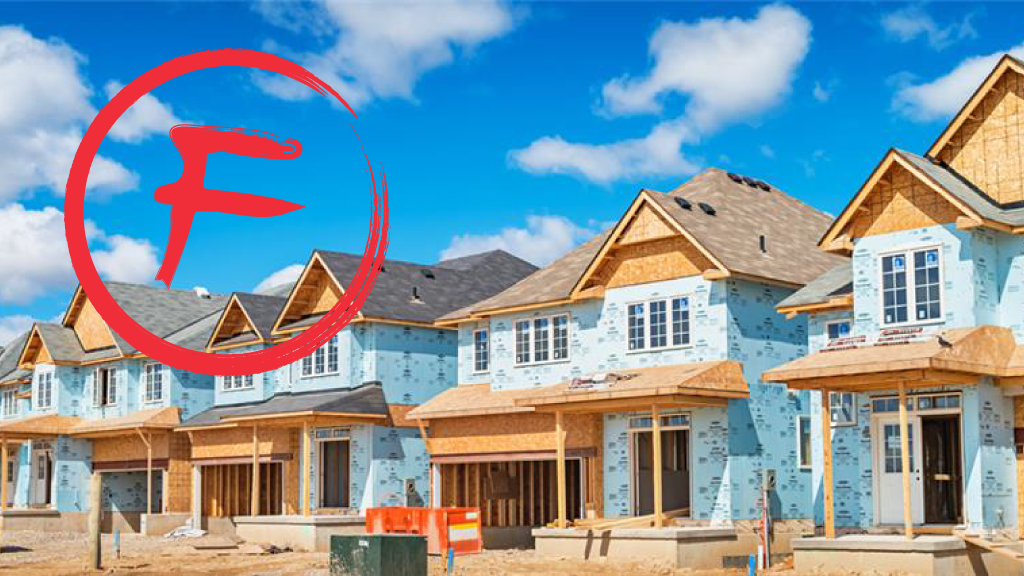
A new report has revealed a troubling reality for housing in Ontario’s Greater Golden Horseshoe region. Conducted by the University of Ottawa’s Missing Middle Initiative for the Residential Construction Council of Ontario (RESCON), the study shows that most municipalities are falling behind on housing starts and sales. With 22 municipalities receiving an “F,” experts are warning that the housing crisis could worsen if action isn’t taken soon.
Overview of the Housing Report
The study evaluated 34 municipalities in the Greater Golden Horseshoe based on housing starts, sales, and employment impact. The findings show a significant downturn in housing activity across the region, raising alarms for industry leaders.
How the Municipalities Were Graded
Municipalities were graded in five categories related to housing starts and sales. The results:
- 22 municipalities – F
- 5 municipalities – D
- 7 municipalities – C or higher
Top-Performing Cities in the Region
Despite the grim results, a few municipalities stood out:
- Brantford – A+
- Milton – A
- Richmond Hill & Burlington – B
These cities managed to maintain relatively stable housing markets compared to the rest of the region.
Toronto’s Troubling Housing Numbers
Toronto, Canada’s largest housing market, performed poorly:
- Housing starts fell 58% in the first six months of 2025.
- Home sales plunged 91% compared to the 2021–24 average.
- An estimated 10,209 jobs were lost as a result.
Key Statistics from the Report
The report highlights steep declines across the region:
- Overall housing starts – down 40%
- Condo apartment starts – down 54%
- Purpose-built rentals – up 8% (the only positive trend)
- Other housing types – down 42%
Impact on Jobs and Employment
The reduction in housing starts has resulted in 24,195 fewer person-years of employment across the Greater Golden Horseshoe. This decline directly affects construction workers, suppliers, and local economies.
Expert Opinions on the Housing Crisis
Richard Lyall, president of RESCON, warned:
“The findings of this report are troubling and should set off alarm bells for policy-makers. The industry has hit a wall, and our economy will suffer if governments don’t act quickly.”
Government Commitments vs. Reality
Both the federal and provincial governments have committed to doubling housing starts. However, current trends show the opposite: housing starts are falling, and new home sales indicate further declines are on the way.
Why Pre-Construction Sales Matter
Pre-construction sales are a leading indicator of housing market health. The report shows:
- Condo apartment pre-sales down 89%
- Ground-oriented pre-sales down 70%
This suggests housing supply shortages will deepen in the coming years.
The Call for Immediate Action
Economists and industry experts argue that governments must:
- Lower tax burdens on new housing
- Modernize approval processes
- Increase support for developers
Without swift action, the housing crisis could spiral further out of control.
Conclusion
Ontario’s housing market is facing its toughest challenge in decades. With over two-thirds of municipalities failing in housing performance, urgent measures are required to stabilize supply, protect jobs, and support communities.