

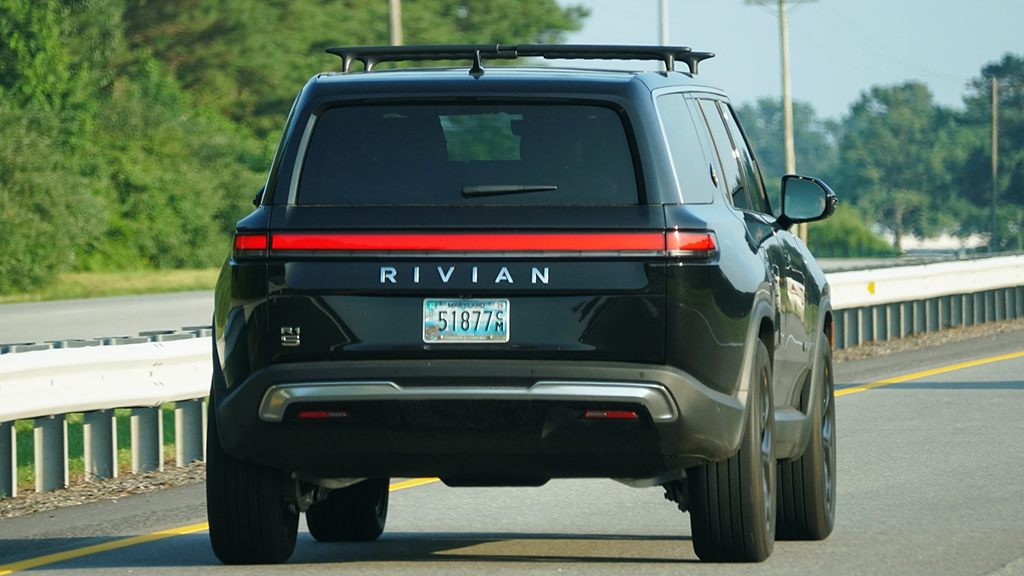
It’s a critical moment for Rivian Automotive, the California-based electric vehicle (EV) manufacturer. Facing heavy losses, slowing EV sales growth, and stiff competition, Rivian has finally broken ground on its long-delayed $5 billion plant in Georgia. The facility is being hailed as a “do or die” move that could determine whether Rivian can scale production and reach profitability in the increasingly competitive U.S. electric vehicle market.
1. Why the Georgia Plant Matters for Rivian
First announced in 2021, Rivian’s Georgia factory is the company’s path to entering the mass market. Currently, Rivian builds the premium R1T pickup truck and R1S SUV in Illinois, but the Georgia facility will allow the company to manufacture 200,000 vehicles annually starting in 2028, with expansion plans for another 200,000 in a second phase.
2. EV Market Conditions in 2025
According to Cox Automotive, U.S. EV sales grew only 1.5% in the first half of 2025, signaling slower adoption. While Tesla still controls nearly 45% of the market, General Motors has climbed to 13%, and Rivian holds a modest 3% market share.
3. Rivian’s Current Lineup and Expansion Plans
At present, Rivian sells:
- R1T Pickup Truck (starting at $71,000)
- R1S SUV
- Delivery vans for Amazon and other partners
Production of the R2 SUV (starting at $45,000) will begin in Illinois next year. A smaller R3 model is also planned, but the company needs Georgia’s production capacity to achieve scale.
4. Scaling Up: R2 and R3 Models
Industry experts, like SBD Automotive, warn that Rivian must scale production of its more affordable R2 and R3 models to survive. As one analyst said:
“You can’t scale if your cheapest vehicle is $70,000. The Georgia plant is essential to reaching profitability.”
5. Competitive Pressures in the EV Industry
Rivian pioneered the niche of electric pickups and SUVs, but now it faces rivals such as:
- Ford F-150 Lightning
- Chevrolet Silverado EV
- Established automakers with broader distribution
Meanwhile, companies like Stellantis and Ford have delayed or canceled EV projects, showing the industry’s uncertain momentum.
6. Financial Struggles and Market Share
Since its 2021 IPO, Rivian’s shares have dropped more than 80%. The automaker reported a $1.66 billion loss in the first half of 2025, compared to 46,000 vehicles delivered this year, down from 52,000 in 2024.
7. State Incentives and Job Creation in Georgia
Georgia has pledged $1.5 billion in incentives for the project, tied to Rivian creating 7,500 jobs with an average salary of $56,000. The state has already spent $175 million on land and infrastructure improvements near the 2,000-acre site east of Atlanta.
| Key Detail | Georgia Plant |
|---|---|
| Investment | $5 billion |
| Capacity | 200,000 vehicles/year (Phase 1) |
| Jobs Created | 7,500 |
| Incentives | $1.5 billion |
| Expected Production | 2028 |
8. Support from Volkswagen and U.S. Government
Rivian secured a $5.8 billion investment from Volkswagen for access to its EV software and electrical technology. Additionally, the Biden administration approved a $6.6 billion loan through the U.S. Department of Energy, further boosting the company’s financial position.
9. Local Opposition and Environmental Concerns
Despite state support, some residents oppose the plant. Farmers worry about groundwater pollution and disruptions to rural communities. Nearby residents have already reported muddy well water after excavation.
10. Long-Term Challenges Facing Rivian
Rivian faces:
- Tariffs adding $2,000 per vehicle
- Loss of $140 million annually due to the rollback of federal tax credits
- Rising costs of raw materials
- Slowing consumer demand
11. Global Competition from Chinese EV Makers
Low-cost, cutting-edge Chinese electric vehicles are an emerging threat. Rivian’s leadership insists, however, that their vehicles will compete on performance and quality, not just price.
12. Final Outlook for Rivian’s Future
With billions invested, thousands of jobs promised, and its future tied to the Georgia plant, Rivian is at a turning point. As Chief Policy Officer Alan Hoffman explained:
“We did not build this company based on federal tax incentives. We believe we can compete with anyone out there, and once given the opportunity, we’re going to excel.”